Hair and scalp health rely on circulation and balance. Daily habits support healthy growth.
Hair health is not determined by a single product or treatment.
It is the result of scalp physiology, hair growth cycles, nutrient availability, and daily care habits working together over time. Modern research shows that when hair and scalp are supported consistently—rather than aggressively—growth quality, density, and resilience improve naturally.
Balanced care creates the ideal environment for natural hair growth.
Hair health is regulated not only by cosmetic care, but by scalp biology, follicular circulation, and cellular renewal processes.
After cleansing, the use of conditioner is essential to rebalance pH levels and seal the cuticle layer, protecting the hair fiber from moisture loss and mechanical damage.
When cleansing and conditioning routines support the hair’s natural regeneration cycle, hair becomes stronger, more resilient, and structurally healthier over time.
Hair is most fragile when wet due to temporary weakening of keratin bonds.
After washing, excess water should be gently pressed out—never rubbed.
Microfiber or soft cotton fabrics reduce cuticle friction compared to regular towels.
Hair should be detangled only when damp, using wide-tooth combs from ends upward.
Heat exposure should be minimized to preserve hair fiber strength.
This approach requires knowledge, patience, and guidance — not shortcuts.
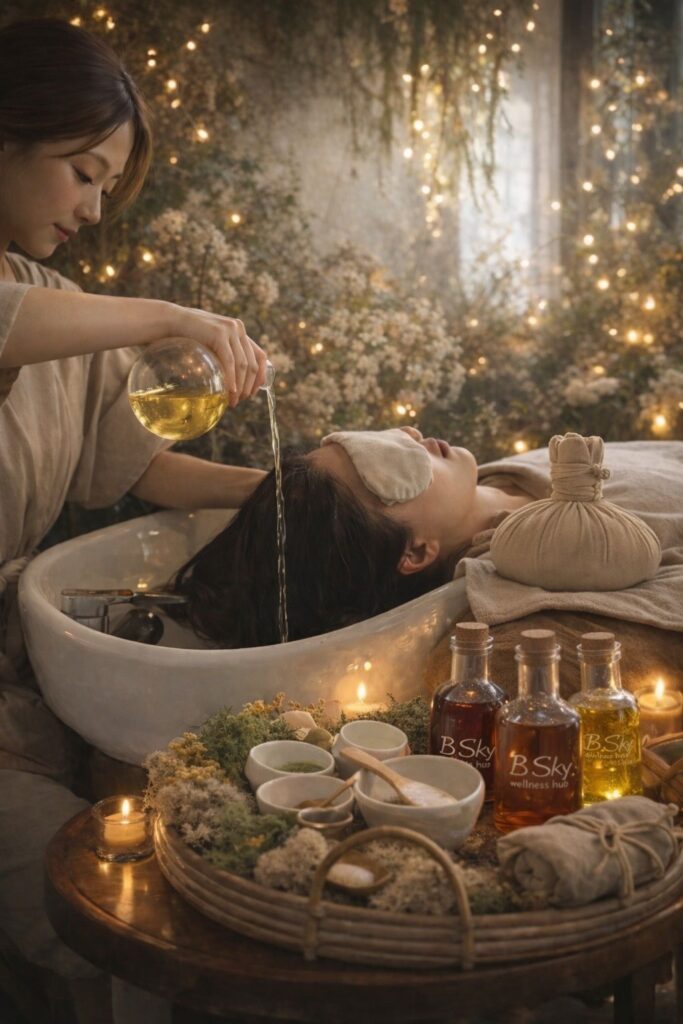

Japanese scalp massage is rooted in centuries-old practices that recognize the scalp as an extension of the nervous and circulatory systems.
From an anatomical perspective, gentle rhythmic stimulation of the scalp increases microcirculation, supporting oxygen and nutrient delivery to hair follicles.
This enhanced blood flow helps regulate the hair growth cycle by supporting the anagen (growth) phase and reducing stress-related follicular disruption.
Scalp massage also influences the autonomic nervous system.
By activating parasympathetic pathways, it helps lower cortisol levels — a hormone strongly associated with stress-induced hair shedding.
Traditionally, Japanese techniques combine manual stimulation with plant-based oils and herbal extracts.
These botanical compounds support scalp barrier function, reduce inflammation, and improve follicular environment without disrupting natural physiology.
Rather than forcing growth, Japanese scalp massage works by restoring balance — creating optimal conditions for hair to grow as the body is designed to do.
Özetle, Önemli Bulgular
Hair and scalp health can be significantly supported through daily at-home care habits; however, long-term and safe results require professional evaluation and guidance. Hair concerns such as shedding, dandruff, excessive oiliness, dryness, or thinning are not purely cosmetic issues—they are closely linked to follicular structure, hormonal balance, microcirculation, nutritional status, and the body’s stress response. Random or uninformed product use may disrupt the scalp’s barrier function and aggravate underlying conditions. For this reason, product selection should always be guided by experts, taking into account hair type, scalp physiology, and individual lifestyle factors. Properly selected shampoos, conditioners, treatment products, and supportive practices help create a biologically balanced follicular environment, allowing hair to follow its natural growth cycle. While daily care, regular scalp massage, balanced nutrition, and stress management form the foundation of healthy hair, personalized planning and professional expertise remain the most reliable path to sustainable hair and scalp health.
Optimal hair and scalp health can only be achieved through proper assessment, relevant laboratory insights when needed, and the careful selection of products tailored to the skin and scalp’s unique biological structure, making professional guidance essential for sustainable results
Leave a Reply