

Chronological age refers to the number of years a person has lived — fixed and defined by the calendar.
Skin age, however, reflects the biological condition of the skin itself and is shaped by physiology, not time.
What Is Skin Age vs. Chronological Age?
Chronological age refers to the number of years a person has lived.
It is fixed, linear, and determined by the calendar.
Skin age, however, reflects the biological condition of the skin itself.
It is shaped by cellular renewal rate, collagen activity, barrier integrity, circulation, hydration status, inflammatory load, and nervous system regulation.
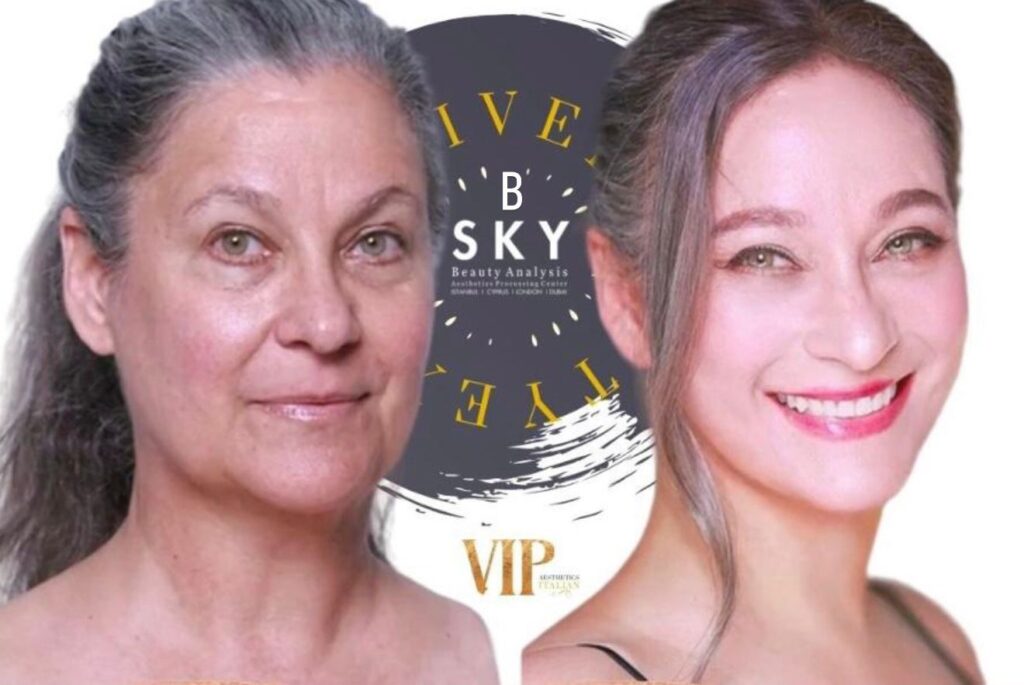
Two individuals of the same chronological age may have completely different skin ages.
This difference is driven by stress biology, cortisol exposure, sleep quality, hydration, lifestyle patterns, and cumulative environmental impact—not time alone.
Klinik fizyolojide, cilt yaşı dinamik ve değiştirilebilir bir durum olarak kabul edilir.
İç sistemler düzenlendiğinde ve desteklendiğinde, cilt fonksiyonu, dayanıklılığı ve yenilenme kapasitesi kronolojik yaştan bağımsız olarak iyileşebilir.
Cilt yaşlanması yılların geri sayımı değil, vücudun iç sistemlerinin zaman içinde ne kadar iyi düzenlendiğinin bir yansımasıdır.
Cilt Yaşlanması Hakkında Kanıtlanmış Gerçekler:
Why Skin Age Is Not the Same as Chronological Age*
Skin aging does not follow the calendar.
While chronological age measures time, skin age reflects how the body responds to stress, repairs itself, and maintains physiological balance.
Two individuals of the same age can present dramatically different skin texture, elasticity, tone, and recovery capacity.
This difference is not accidental—it is biological.
Modern dermatological science confirms that skin aging is shaped less by years lived and more by hormonal regulation, nervous system activity, inflammation control, and cellular hydration.
- Cortisol and Stress Physiology
Cortisol is a survival hormone designed for short-term adaptation.
When stress becomes chronic, cortisol remains elevated beyond its protective role.
At the skin level, sustained cortisol signaling:
• suppresses fibroblast function
• inhibits collagen and elastin synthesis
• weakens barrier repair
• increases silent, low-grade inflammation
This means skin aging is not simply a matter of collagen “loss.”
Collagen production is actively downregulated under chronic stress conditions.
⸻
- The Nervous System–Skin Connection
The skin is one of the body’s most neuro-responsive organs.
It continuously receives signals from the central and autonomic nervous systems.
When the nervous system remains in a sympathetic (fight-or-flight) state:
• microcirculation slows
• oxygen and nutrient delivery decrease
• cellular repair is delayed
When parasympathetic regulation dominates:
• blood flow improves
• inflammatory signals calm
• regenerative processes activate
From a physiological perspective, youthful skin is a visible marker of a regulated nervous system.
⸻
- Inflammation, Hydration, and Cellular Aging
Chronic low-grade inflammation often exists without visible redness or irritation.
It manifests instead as:
• dullness
• sensitivity
• uneven texture
• reduced treatment response
At the same time, cellular dehydration disrupts enzymatic activity, slows renewal, and weakens the extracellular matrix.
Healthy skin aging depends on:
• adequate intracellular hydration
• controlled inflammatory signaling
• intact barrier function
Without these foundations, even advanced treatments cannot produce lasting results.
Skin age is not determined by time alone.
It is the cumulative outcome of stress exposure, nervous system balance, hormonal regulation, hydration status, and recovery quality.
Clinically, younger-looking skin reflects a body that knows how to:
• regulate cortisol
• enter restorative sleep cycles
• maintain cellular hydration
• activate repair instead of defense
True skin longevity is achieved not by chasing surface solutions, but by supporting the body’s internal systems that govern repair, resilience, and regeneration.
True skin youth is not created on the surface—it is restored when stress biology, nervous system regulation, and cellular hydration work in physiological harmony.

Leave a Reply